
If your landlord has kept part or all of your security deposit, you are not powerless. In many cases, deductions can be reviewed, challenged, and, if the deductions are improper, recovered.
Act Before the Statute of Limitations Expires
Tenants must file suit to get their deposit back within six years if there is a written lease (Utah Code 78B-2-309(1)(b)) or four years if the lease was not in writing (Utah Code 78B-2-307(1)(a)). The time starts the day after the landlord’s thirty-day deadline from the tenant’s move-out to return the deposit expires. However, you should act quickly rather than relying on this deadline as evidence may be lost in this time. Disputing your deposit sooner puts the landlord on notice that they need to preserve records related to your deposit.
Request an Itemized Statement
In Utah, landlords must provide a written itemization explaining any deductions within 30 days of checkout.
If the deposit has not been properly returned, or if you did not receive a required itemized statement within 30 days, send a formal written request.
Your notice should:
- Identify the rental property address
- State the dates of your tenancy
- Specify the amount of the deposit paid
- State that you are requesting:
- Return of the deposit (or remaining balance), or
- A complete itemized statement of deductions (if not provided)
- Include your current forwarding address
- Clearly state a five-day deadline to respond to the notice.
- Be delivered in-person or by certified mail to the landlord, their property manager, left with an adult at their home or office, or taped to a visible place such as the door at their home or office. Note: unlike a court summons, this does not need to be served by a third party, the tenant can do it themselves.
Keep the tone professional and factual. The goal is to document your request and preserve your rights. Keeping copies and proof of delivery can be very important if a dispute arises later.
If the landlord fails to respond within the five-day deadline, they are liable for a $100 civil penalty, the entire deposit, and any prepaid rent.
When you receive the statement:
- Compare it to your lease agreement
- Check whether charges are clearly explained
- Identify any amounts that seem excessive or unsupported
- Distinguish normal wear and tear, which is not deductible, from actual damage, which is deductible
Step 2: Gather Your Evidence
Documentation is critical. Collect:
- Move-in photos or videos
- Move-out photos or videos
- The lease agreement
- All written communications with your landlord
- Receipts for cleaning or repairs
- Proof of forwarding address (if relevant)
- A copy of the deposit payment record
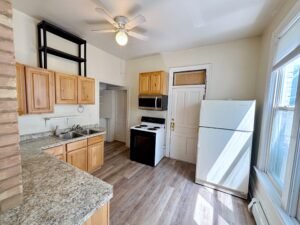
The more organized your evidence, the stronger your position.
Step 3: Send a Written Dispute
If you believe deductions are improper, send a calm, professional written response.
Your letter should:
- Identify the lease and property address
- State that you dispute specific deductions
- Reference supporting evidence
- Request return of the disputed amount
- Set a reasonable deadline for response
- Be sent in a way you can prove delivery (e.g., certified mail or documented electronic communication if permitted)
Keep the tone factual and non-accusatory. The goal is resolution, not escalation.
Step 4: Consider Informal Resolution Options
Before filing court action, you may consider:
- A follow-up written request
- Mediation
- A formal demand letter
- A final opportunity to resolve the dispute directly
- Providing a copy of the small claims court paperwork prior to filing
Sometimes, landlords respond once they understand you are prepared to escalate.
Step 5: Confirm Your Case is Eligible for Small Claims Court
If informal efforts do not resolve the issue, small claims court is typically appropriate.
Small claims court is generally worth considering when:
- The landlord refuses to return funds you believe are wrongfully withheld
- You have strong documentation supporting your position
- The amount in dispute falls within Utah’s $20,000 small claims limit which is typical for deposits
- The landlord has not complied with written requests
- The deadline for return of the deposit has passed
- The dispute is primarily about money (not complex legal claims like personal injury or harassing behavior)
Small claims court is designed for individuals to represent themselves without hiring an attorney. Procedures are simplified, and filing costs are usually modest compared to potential recovery.
Before Filing, Ask Yourself:
- Do I have clear evidence?
- Have I sent a written dispute?
- Is the amount significant enough to justify the time and filing fee?
- Am I within the statute of limitations (time limit for bringing a claim)?
If the answer to these is yes, filing may be a reasonable next step.
Step 6: Filing in Small Claims Court
If you decide to proceed:
- Make sure combined damages (if suing for anything besides the deposit) total less than $20,000.
- Confirm proper venue (the justice court of the city or county where the property is located or where the landlord lives)
- File the complaint or claim form
- Pay the filing fee
- Arrange proper service on the landlord
- Prepare your evidence for the hearing
Bring organized copies of:
- Lease agreement
- Photos/videos
- Itemized statement
- Written dispute correspondence
- Receipts and documentation
- Proof of payment of the deposit
Judges in small claims courts typically focus on documentation and reasonableness.
Preventing Future Deposit Disputes
To protect yourself in future tenancies:
- Take detailed move-in photos
- Complete a written move-in condition checklist
- Communicate repairs in writing during the tenancy
- Keep copies of all correspondence
- Document cleaning and repairs before move-out
Security deposit disputes are common, and many are resolved through documentation and clear communication. If your deposit was withheld unfairly, you have structured options for recovery—starting with a written dispute and, if necessary, small claims court.
Preparation dramatically reduces disputes.